Emerson’s History
Since 1880, Emerson College has been creating the extraordinary—harnessing the power of words, performances, stories, and ideas to connect people and shape society.
What began as a school of oratory has grown into an internationally recognized college for communication, the arts, and media—rooted in Boston, connected to Los Angeles and the world, and still evolving with every generation of Emerson students.
Our Story
Charles Wesley Emerson founded the Boston Conservatory of Elocution, Oratory, and Dramatic Art in 1880. Renamed for its founder in 1890, Emerson College quickly became a place where new forms of communication, performance, and storytelling evolved.
As the ways people connected changed, Emerson kept moving forward. The College offered the first collegiate-level program in children’s theater in 1919, created the first journalism course in the 1920s, and offered professional training in speech pathology in the 1930s. Then, it developed one of the first undergraduate programs in broadcasting and broadcast journalism, and launched the first educational radio station in the 1940s—later adding a television station in the 1950s.
Together, these innovations expanded Emerson’s approach to teaching students how people reach other people—through the media, institutions, creative practices, and technologies that inform, entertain, persuade, and inspire.
Emerson brought this same hands-on philosophy to Los Angeles in 1986 through an internship-based program. In 1988, the College expanded its global reach with the purchase of Kasteel Well, a 14th-century castle in the Netherlands. Since then, Emerson-sponsored programs have taken students around the world, including Paris; Switzerland; Washington, DC; Spain; Austria; and China. And in 2014, the College opened its own permanent campus in the heart of Hollywood, giving students a home base for courses, internships, alumni connections, and firsthand experience in one of the world’s most influential creative communities.
Emerson’s tradition of firsts continues today. In 2015, the College announced the nation’s first specialized BFA in Comedic Arts, recognizing comedy as a serious creative discipline shaped by writing, performance, production, and cultural insight. That same year, Emerson announced its Business of Creative Enterprises major, which was among the first of its kind in the country.
Our Impact on Boston
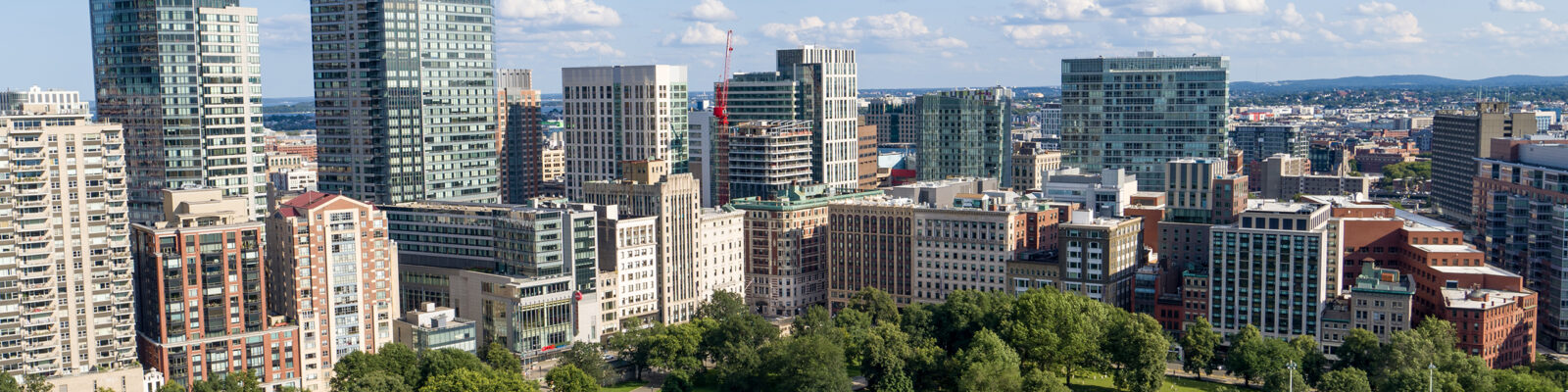
Emerson’s story is also part of Boston’s story. Over the past generation and beyond, the College has played a major role in revitalizing downtown Boston’s Theatre District and reenergizing the cultural life of Boston and New England.
In 2003, Emerson opened the Tufte Performance Production Center at 10 Boylston Place, an 11-story building that houses Emerson’s Performing Arts Department and includes two theaters, television studios, makeup and costume labs, faculty offices, and the Huret and Spector Gallery. That same year, the renovated Cutler Majestic Theatre reopened as one of the main stages for Emerson performers and outside professional productions.
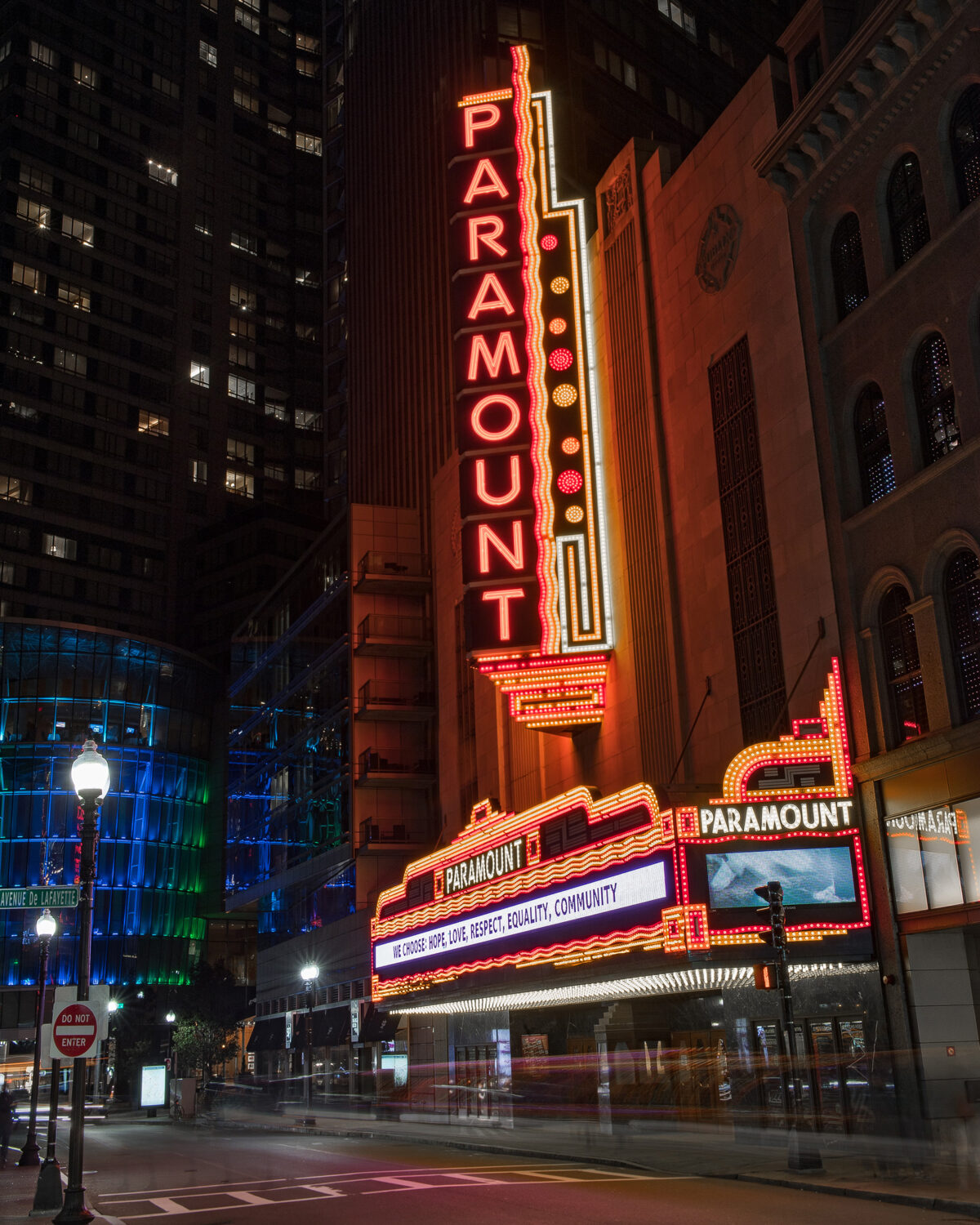
The College opened Piano Row in 2004, adding residential suites, athletic facilities, offices and meeting rooms for student organizations, gathering places for off-campus students, spaces for small-group rehearsals and performances, and dining facilities. In 2005, Emerson purchased the historic Paramount Theatre, restored its art deco marquee, and expanded the complex to include spaces for stage productions, film screenings, teaching, and rehearsing.
More recently, Emerson built a new residence hall and dining hall on Boylston Place, completed the restoration of the historic Little Building residence hall, and restored the Emerson Colonial Theatre on Boylston Street in partnership with Ambassador Theatre Group.
Together, these investments show what Emerson has always believed: that creative education should be active and deeply connected to the world around it. By restoring historic theaters, building new spaces for students, and opening its doors to artists and audiences across the city, Emerson has helped make downtown Boston a place where students grow, audiences gather, and culture keeps moving forward.